It’s not about doing more. It’s about doing what works.
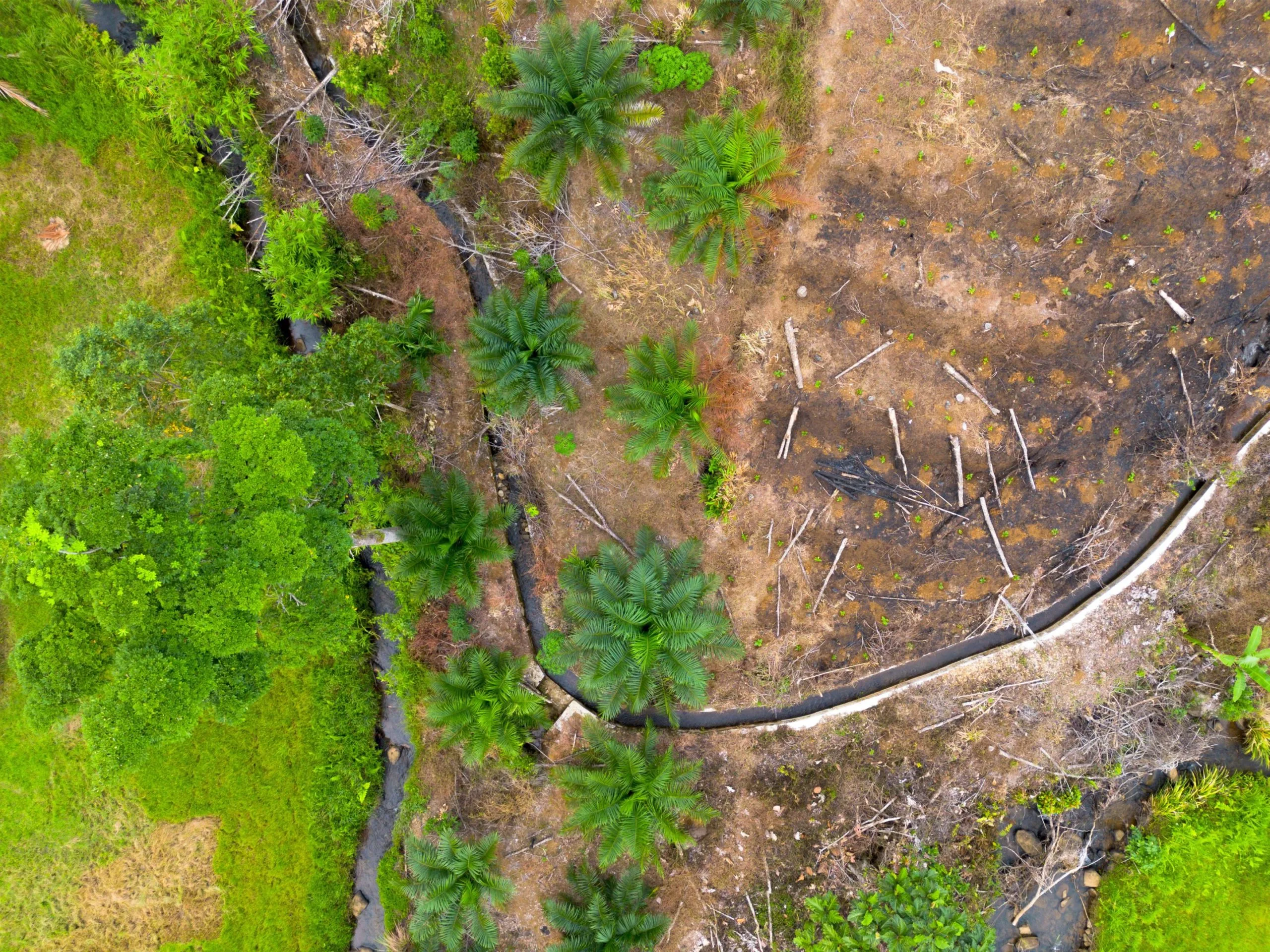
It’s no secret that deforestation is a global problem. But its roots are more concentrated. From the Amazon to the Congo Basin to parts of Southeast Asia, large-scale forest loss endures for the sake of agriculture, infrastructure, and resource extraction. Fuelled by global demand, the impact of deforestation has become impossible to ignore, impacting not just environmental biodiversity, but local communities too.
So what’s the solution? There’s no shortage of charities and movements worldwide playing their part to hit the brakes on forest degradation and restore lost natural land. However, without understanding exactly where deforestation is happening and what’s driving it, the world blindly follows universal advice that fails to address the real problem (that’s why we support Global Canopy).
And the numbers make this clear.
Every year, millions of hectares of forest continue to be lost, in areas that play a critical role in climate regulation, biodiversity protection, and local community support. And once a forest is gone, the consequences extend far beyond the area’s borders. The problem isn’t evenly distributed, and neither are the solutions.
Deforestation facts: why simple solutions fall short
Sadly, good intentions don’t always lead to real outcomes. When deforestation enters the conversation, the solution often sounds simple. Plant more trees. Use less paper. Raise awareness. And on the surface, ideas like these feel logical. Accessible. Easy to understand and support.
But tree planting only works under the right conditions. Poorly-planned projects often prioritise speed over ecological fit, introducing monocultures that store less carbon, support less biodiversity, and struggle to survive long-term. In some cases, tree-planting can even have an adverse effect, disrupting existing ecosystems instead of restoring them.
Consumer-led action is no different. While paper reduction and sustainable choices hold value, the truth is that deforestation is chiefly driven by large-scale systems, particularly agriculture and global supply chains linked to commodities like cattle, soy, palm oil, and timber. Individual behaviour alone is not enough to have an impact at that scale.
So instead of focusing on visibility, we must shift the priority to impact. Because without tackling the core culprits of deforestation, meaningful progress is but a pipe dream. Real progress, however, targets the systems that cause forest loss in the first place, not just the symptoms that follow.
Learn how you can support high-impact action
The most effective solutions to deforestation
So if simple solutions don’t address the root causes, what will? The most effective solutions to deforestation are united by a common thread: they work at scale. They target the systems driving forest loss, not just the visible outcomes. These include:
1. Protecting existing forests
The most immediate and effective way to reduce forest loss is to stop deforestation before it happens. Existing forests store carbon more effectively than their newly planted counterparts, while providing at least 8 times more carbon removal per hectare than new regrowth. They also support richer biodiversity and regulate climate. Once cleared, forests can take decades if not centuries to recover (if they recover at all).
But by defending existing forests through conservation programs, legal protection, and system monitoring, we can prevent irreversible loss before restoration becomes necessary.
2. Reforming supply chains
A significant portion of global deforestation is linked to supply chains like agricultural expansion, where commodities like cattle, soy, and palm oil drive large-scale forest clearance. With industries like these operating worldwide, demand in one region directly influences land use in another.
By reforming supply chains through sustainable sourcing, transparency, and corporate accountability, forests will feel less pressure.
3. Policy and enforcement
Strong policies only work if enforced. While many territories already have environmental protections in place, weak governance and limited enforcement leave deforestation to continue to run rampant. And these policy gaps also leave room for the likes of illegal logging, land clearing, and unregulated expansion.
The only way to create a more consistent barrier against large-scale forest loss here is to strengthen enforcement, improve monitoring, and align policy with economic incentives.
4. Indigenous land rights
Some of the most effective forest protection happens where Indigenous communities hold control over their land. Research consistently highlights that forests managed by Indigenous groups experience lower rates of deforestation, as these communities rely on woodlands for their livelihoods and have a long-term interest in preserving them.
By supporting land rights and local governance, we can stop deforestation while strengthening the communities that count on them.
5. Large-scale restoration
Restoration plays a role, but only when enacted with ecological understanding. Beyond planting trees, successful restoration programs focus on rebuilding ecosystems by selecting native species, restoring soil health, and allowing natural regeneration where possible.
Done properly, restoration can support biodiversity, improve carbon storage, and rebuild ecosystems over time. However, restoration works only as a complement to protection, not a replacement.
Contribute to real climate impact
Why coordination and funding matter
The solutions to deforestation are not unknown. We already understand what works. Protect forests, reform supply chains, strengthen policy, and support local communities. These approaches have been tested, refined, and proven the world over.
Yet, progress is uneven. That’s because progress depends not on solutions alone, but on the funding, coordination, and maintenance underpinning them.
Many high-impact initiatives operate with limited resources, while some struggle to scale owing to fragmented or inconsistent funding. A lot of the time, efforts overlap without alignment, reducing overall efficiency instead of bolstering it.
Cracking the code on how to prevent deforestation calls for coordinated action spanning organisations, regions, and systems, as well as sustained funding that prioritises long-term outcomes over short-term visibility. Without that, even the strongest solutions will wilt on the path to their full potential.
Where real progress is happening
While it might not always be visible, positive change is already underway. Across key deforestation hotspots globally, organisations are working at a systems level to protect forests, restore ecosystems, and target the key drivers behind widespread forest loss. Some focus on monitoring and transparency, others on tracking land use and supply chain accountability, and others on conservation directly, shielding high-risk regions before damage becomes irrevocable.
Momentum around restoration is also on the rise, with numerous projects prioritising ecosystem recovery over volume, focusing on native species, soil health, and long-term resilience over short-term planning targets.
Above all, some of the most effective initiatives aren’t operating in isolation, but as a multi-sector united front. Combining policy, conservation, and community-led initiatives, more sustainable outcomes are finally coming to light, and strong results are finally emerging from the ashes.
What can everyday people do about it?
For people looking to support real progress like this, the challenge remains. That’s why the Global Returns Project (GRP) exists, revealing which organisations are credible, where funding goes, and how you can contribute meaningfully without spending hours navigating a complex landscape – and still being left with more questions than answers.
Every human alive holds the power to positively impact forests. By transcending surface-level changes and focusing on actions that influence the systems driving deforestation in the first place, we can all play a role.
The first step is education and knowing deforestation facts. Understanding how products like beef, soy, palm oil, and timber are linked to deforestation helps shift demand over time, and while this alone won’t solve the greater problem, awareness places broader pressure on supply chains to operate more sustainably.
But ultimately, the most prevalent impact is rooted in leverage – where your time, attention, and contribution can support solutions that are already working, and help them scale. That’s how individual action moves beyond intention and starts to make a measurable difference.
Take the next step
100% of donations to the Global Returns Project goes straight to our portfolio of partner climate and nature charities – no hidden fees.
Whether you want to take action now or just stay informed on how to prevent deforestation, GRP gives you the right information and direction while making it easier to contribute in ways that really make a difference.
References:
- https://www.worldwildlife.org/our-work/forests/deforestation-and-forest-degradation/
- https://ourworldindata.org/deforestation
- https://trees.org.za/we-need-more-trees-to-fight-climate-change-but-in-the-right-places/
- https://ourworldindata.org/drivers-of-deforestation
- https://www.nature.org/en-us/what-we-do/our-priorities/tackle-climate-change/climate-change-stories/reforestation-natural-climate-solutions/
- https://gfr.wri.org/forest-extent-indicators/deforestation-agriculture
- https://www.sciencedirect.com/science/article/pii/S2666660X23000580
- https://gfr.wri.org/social-governance-issues-indicators/indigenous-community-forests
- https://www.sciencedirect.com/science/article/pii/S2590332225000211