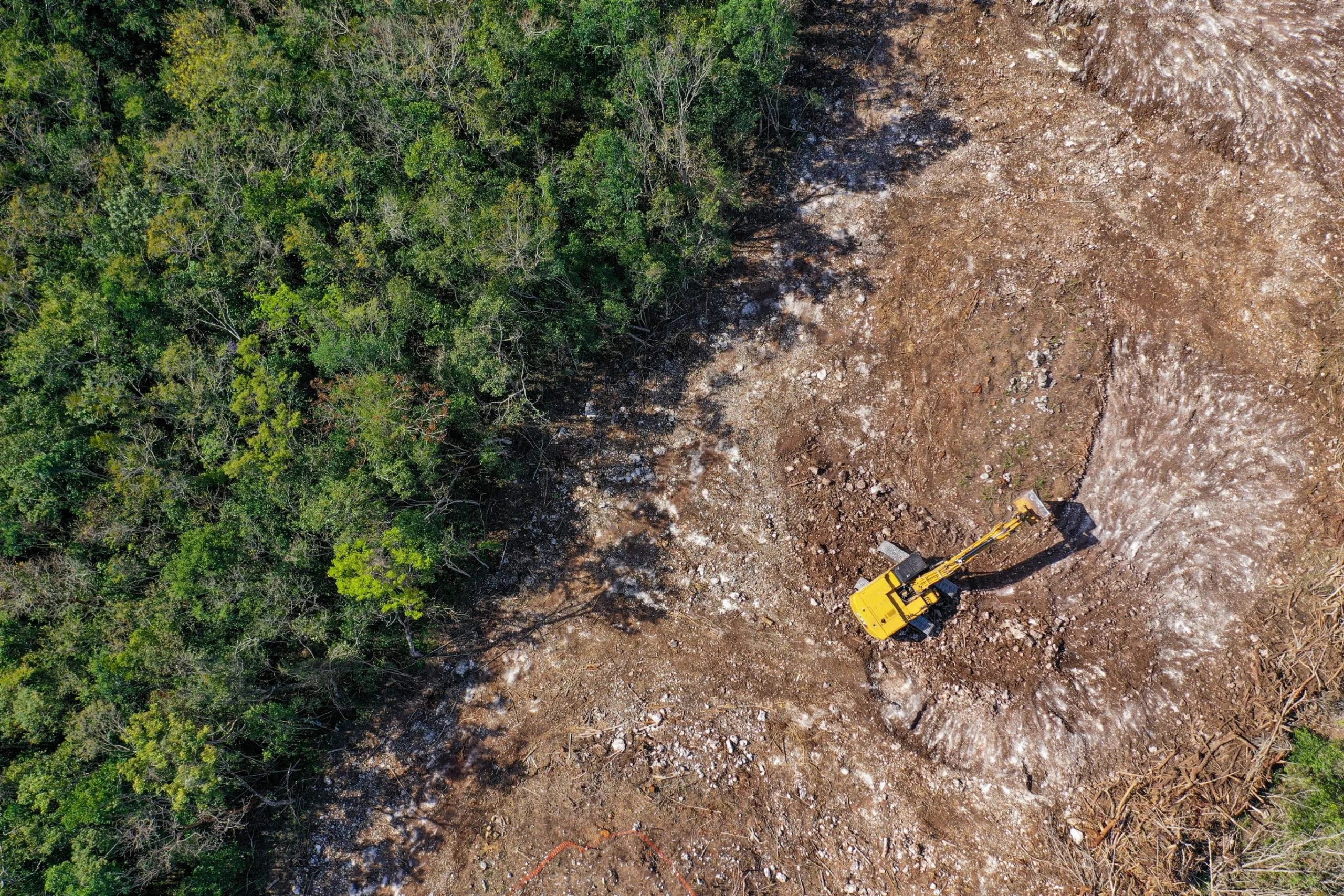
It’s not what’s removed. It’s what comes next.
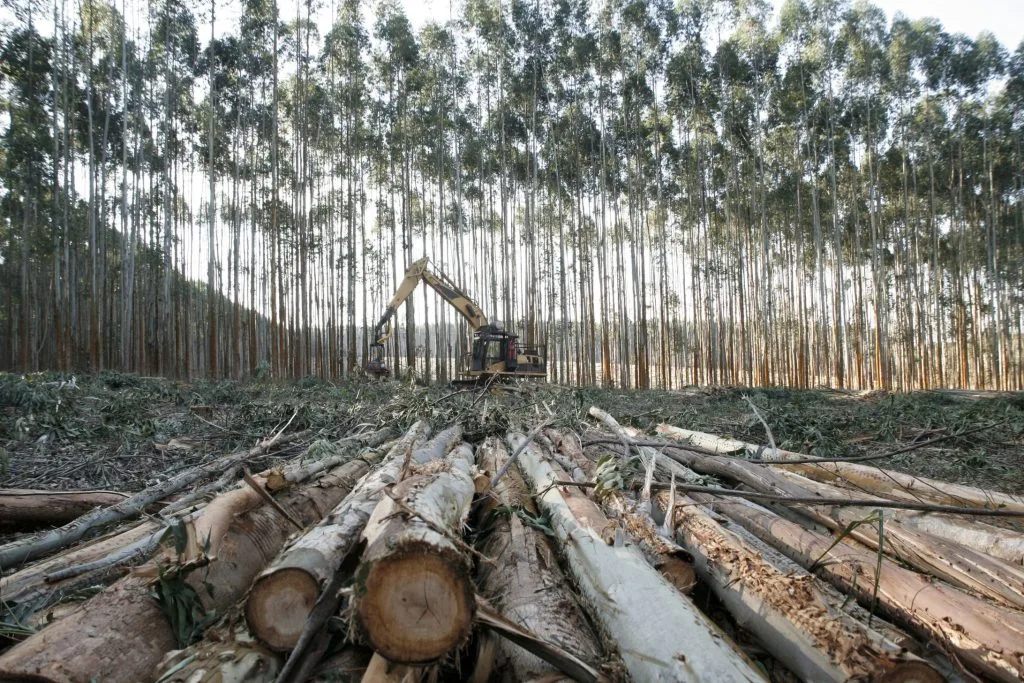
What comes to mind when you think of deforestation? For most people, it’s usually reduced to a simple image of trees cut down and land cleared. But in reality, the problem is much deeper than this.
Contrary to what most think, forests don’t exist in isolation. They regulate our climate, support biodiversity (with 80% of the world’s terrestrial biodiversity found in forests), and protect the systems human life as we know it depends on. Remove forests, and the impact travels far beyond what’s visible.
When forests disappear, the damage doesn’t stop at the edge of the land. Its impact spreads into ecosystems which are forced to shift against their will. Into weather patterns that subtly start to change. Natural systems that took thousands of years to stabilise begin to lose balance.
And that’s where the real problem starts. Yet, despite the magnitude of this tragedy, most of the world continues to underestimate what deforestation actually sets in motion.
What Deforestation Actually Does
Beyond the appearance of “just sitting there”, forests are actually working all the time, regulating rainfall patterns across entire regions. They store vast amounts of carbon and create conditions that allow ecosystems to function and recover. Take that away, and those systems break.
Rainfall becomes less predictable. Soil loses its structure and nutrients. Land that once supported life turns fragile and, eventually, unusable. And what looks like a localised change quickly spirals into a widespread crisis regionwide. Droughts in Sao Paulo Brazil, for example, are shown to be influenced by deforestation in the Amazon.
Imagine a single cleared area disrupting water cycles far beyond its borders. Or reducing agricultural stability. Or increasing vulnerability to droughts and floods, often at the same time, in different places. And once these systems have shifted, restoring them becomes a far bigger challenge than protecting them in the first place.
As environmental ecosystems unravel, species lose their habitats too. While some adapt, many don’t. All while food chains break down, populations shrink, and biodiversity declines at a pace that’s difficult to recover from. And this is where the image of deforestation shifts from simple damage to long-term loss.
LEARN HOW YOU CAN SUPPORT HIGH-IMPACT CLIMATE ACTION
The biggest price: the effects of deforestation on humans
Aside from wreaking havoc on ecosystems, deforestation also changes the way we live. With millions of communities (and the systems that support them) depending on our forests for food, water, and income, deforestation becomes detrimental to their livelihoods – with 1.6 billion people relying on forests daily. That’s nearly 25% of the world’s population, many of whom comprise the world’s poorest.
When forests disappear, crops become harder to grow, water sources become less reliable, and local economies start to weaken. And the negative effects of deforestation don’t stay local either.
Forests provide USD$75-100 billion in goods and services per year, from clean water to healthy soils. As land degrades and resources dwindle, communities pay the price. People are forced to quickly adapt without warning, often without the infrastructure to support the change. In some cases, this leads to displacement. In others, it increases competition for already-limited resources.
And here’s the wider impact few are privy to: without forests helping regulate the climate patterns agriculture depends on across regions, food production becomes less predictable. Prices fluctuate, supply chains feel the strain, and the impact ripples through systems people rely on every day.
BACK PROVEN CLIMATE SOLUTIONS
The effects of deforestation and global warming: one of the most direct drivers of climate change
24/7, forests are regulating the Earth’s climate by acting as carbon sinks, absorbing and storing large amounts of carbon dioxide from our atmosphere. In fact, approximately 2.6 billion tonnes of carbon dioxide (a third of the CO2 released from burning fossil fuels) is absorbed by forests annually. But when forests are cleared by human hands, that stored carbon gets released instead of staying safely locked away.
And the impact is more severe than we could imagine. Instead of helping to stabilise the climate like it has for thousands of years, the deforested land becomes a source of emissions itself, with around 25% of all global emissions coming from the land sector. The more land that’s cleared, the more carbon enters the atmosphere, accelerating global warming at an alarming pace.
But carbon storage loss and release is only half the story. It’s a double impact, whereby we lose one of the systems that actively removes carbon from the atmosphere over time. This means emissions increase, while our ability to offset them decreases.
CONTRIBUTE TO REAL CLIMATE IMPACT
Awareness ≠ impact
While noble, current efforts alone are inadequate. People, governments, organisations, understand the problem well and attempt to contribute in various ways, but progress is not happening at the pace we’d like to believe. On the contrary. When we zoom out, the “results” tell a very different story.
Deforestation is still rolling out at scale, driven by agriculture, infrastructure, and global resource demand. Efforts to slow down deforestation often occur in isolation, without the coordination necessary to create meaningful, lasting change.
So if intention isn’t the problem, and effectiveness is, what do we do now? How can we actually make a difference? In a crowded landscape with every organisation claiming impact, how do we solve the real problem – transcending awareness and implementing effective action?
Where Global Returns Project (GRP) comes in
The Global Returns Project (GRP) identifies and supports a portfolio of the highest-impact climate and nature charities on the planet, focusing on organisations that address issues like deforestation at a systematic level. Instead of asking individuals to research dozens of charities, assess credibility, and compare impact, GRP does that work upfront.
The GRP difference
- 100% of donations go directly to partner charities
- Support for top organisations like Global Canopy, Trillion Trees, Rainforest Alliance, Rainforest Trust, and ClientEarth
- Varied impact including forest protection, restoration, and mitigating the environmental impacts of deforestation
Charities and organisations like these are making leaps and strides to:
- Combat the adverse effects of deforestation and forest degradation of areas with high biodiversity and cultural significance
- Conserve the benefits people and societies get from forests, such as livelihoods and carbon stocks
- Restore forest landscapes to enhance climate change mitigation and adaptation
- Restore 350 million hectares of deforested land (and 1.7 gigatonnes of CO2) by 2030
- Enable rights-based land use to strengthen community control over forests, alleviate poverty, enhance biodiversity, and manage forests more sustainably
- Maintain an equitable supply of forest goods and services by unlocking forest benefits
Instead of spreading our efforts thinly, GRP helps you concentrate support where it has the most potential to drive meaningful, measurable change. This more strategic approach to giving is the only thing that will initiate the change we really need.
LEARN HOW YOU CAN SUPPORT HIGH-IMPACT CLIMATE ACTION
What smart climate giving looks like
When it comes to deforestation, our impact cannot be measured by the number of organisations we support, but rather, by how effectively that support translates into real-world change. With the right intervention, in the right place, at the right time, we can promote a far larger shift and positive long-term outcomes than scattered effort allows.
The next step
100% of your donation goes straight to our portfolio of partner climate and nature charities. Whether you want to take action now or just stay informed, GRP gives you the right information and direction while making it easier to contribute in ways that really make a difference. While deforestation is indeed a complex crisis, the path forward need not be complicated.
Support our work
References:
- https://iucn.org/resources/issues-brief/forests-and-climate-change
- https://academic.oup.com/bioscience/article-abstract/59/4/341/346941?redirectedFrom=fulltext
- https://commonland.com/drought-or-downpour-deforestations-impact-on-rain/
- https://www.ifaw.org/international/journal/what-is-deforestation-impact-wildlife
- https://ourworldindata.org/data-insights/deforestation-is-no-longer-inevitable