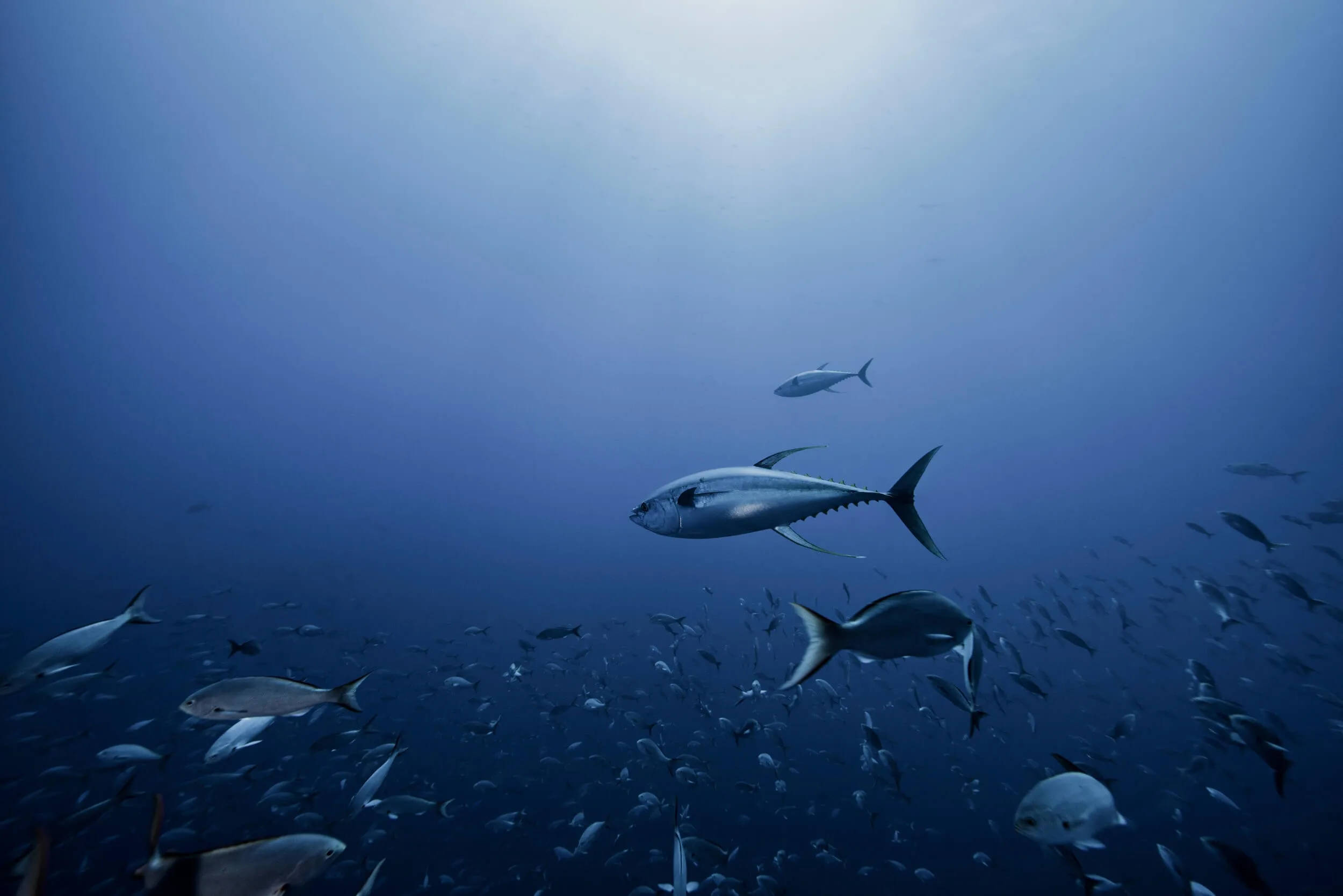
Fish stocks do not collapse overnight. They decline quietly, year after year, often in full view of the evidence that could have prevented it. By the time the damage is impossible to ignore, the warning signs have long been written into scientific reports, legal obligations and policy advice that went unheeded.
Overfishing is often described as a technical problem; a matter of quotas, stock assessments and difficult negotiations. But for organisations working closest to the issue, this framing misses the point. Overfishing is not a failure of knowledge. It is a failure to act on what we already know.
At the Global Returns Project (GRP), we support charities that address overfishing at its root: by ensuring that scientific evidence, legal commitments and long-term public interest are not sacrificed for short-term political compromise.
Two of those charities are Blue Marine Foundation and ClientEarth. Both approach the problem from different angles yet reach the same conclusion. Overfishing persists not because it is inevitable, but because it is repeatedly allowed.
When science becomes optional
Scientifically, overfishing occurs when fish are removed from the ocean faster than populations can replace themselves. The consequences are well documented: shrinking stocks, fewer large fish, disrupted food webs and declining productivity. Yet both Blue Marine Foundation and ClientEarth emphasise that many fisheries are not in decline because data are missing or uncertain. In many cases, the science is clear and is simply ignored.
Across the UK and globally, catch limits are routinely set above levels scientists advise are sustainable, even where laws explicitly require a precautionary approach. This creates a slow erosion of marine ecosystems that is easy to normalise and difficult to reverse. Fish are still landed, boats still go to sea and markets still function, until, suddenly, they don’t.
Blue Marine Foundation: choosing recovery over decline
From Blue Marine Foundation’s perspective, overfishing is one of the greatest threats to ocean health, with impacts that extend far beyond individual fish stocks. Removing too much life from the sea weakens the ocean’s ability to produce oxygen, absorb carbon dioxide and regulate the climate. The ocean is the world’s largest carbon sink and it undermines food security and coastal livelihoods, particularly in communities most dependent on healthy marine ecosystems.
Many commercial fish stocks are already fully exploited or overexploited, yet fishing pressure remains high because quotas are set too generously. This is not an accident. It is a political choice. Blue Marine argues that following scientific advice should not be optional, and that ‘Total Allowable Catches’ must not exceed levels recommended by scientists. When governments choose otherwise, they gamble with the resilience of entire ecosystems.
Protection is central to this approach. Blue Marine supports protecting at least 30 per cent of the ocean, otherwise known as, 30×30 is a global conservation target to effectively protect and manage at least 30% of the world’s oceans and land by 2030 to curb biodiversity loss and climate change. However, it is more than just a number, the protection must be real.
Too many Marine Protected Areas exist only on paper, allowing damaging fishing practices to continue unchecked. Designating an area as “protected” while permitting destructive activity undermines both conservation efforts and public trust. W
here policy fails, Blue Marine has been willing to turn to the courts, challenging quota decisions that exceed scientific advice and arguing that they breach sustainability laws. In this context, litigation is not obstruction – it is enforcement.
ClientEarth: when overfishing breaks the law
ClientEarth approaches overfishing through the lens of law and accountability. Their position is straightforward: governments have binding national and international obligations to fish sustainably, and many are failing to meet them. Overfishing persists, they argue, because short-term economic interests dominate negotiations, scientific advice is sidelined and decision-making lacks transparency. This is not merely poor policy. In many cases, it is unlawful.
ClientEarth consistently calls for fishing limits to be set at or below scientific advice, using precaution where data are uncertain. For fish stocks shared between countries, negotiations must prioritise sustainability and legal commitments over political convenience. Managing species in isolation, they argue, ignores how oceans actually function. Effective fisheries management must consider food webs, mixed fisheries and cumulative impacts.
Transparency is essential. Governments should clearly explain how quotas are set and publish the data behind their decisions. Without transparency, accountability is impossible. For vulnerable and threatened stocks, ClientEarth supports zero or near-zero catch limits and strict bycatch controls, particularly for deep-sea species that recover very slowly. From national fisheries laws to international agreements and global development goals, the legal commitments already exist. ClientEarth’s work focuses on ensuring they are honoured.
A solvable problem, if choices change
Although Blue Marine Foundation and ClientEarth work in different ways; their diagnosis is the same. Overfishing continues because scientific advice is treated as negotiable, environmental limits are compromised and enforcement is politically inconvenient. This creates a dangerous illusion of stability. Decline is gradual enough to be ignored, until recovery becomes far more difficult and uncertain.
At GRP, we support charities that intervene where leverage is greatest. In the case of overfishing, that leverage lies in governance, law and enforcement. The most effective solutions do not rely on changing individual behaviour, but on changing the rules that shape the entire system.
Blue Marine Foundation helps rebuild marine ecosystems by securing meaningful protection and challenging destructive practices. ClientEarth ensures governments and industries are held to the laws and commitments they have already made.
The science is clear. The legal frameworks exist. The solutions are known. What has been missing is consistent pressure to apply them and accountability when they are ignored. That is why philanthropy directed at governance, enforcement and marine protection delivers such high returns. It does not only protect individual species; it helps restore the ocean’s ability to feed people, stabilise the climate and sustain life on Earth.
When science is followed and laws are enforced, fish stocks recover. When they are not, decline is inevitable. The future of our oceans depends on which path we choose.
Support our work
References
Core definitions and global status of overfishing
- FAO. (2022). The State of World Fisheries and Aquaculture 2022: Towards Blue Transformation. Food and Agriculture Organization of the United Nations.
- Gundi, B. R. (2016). Overfishing and its ecological consequences: A global perspective. Journal of Survey in Fisheries Sciences, 3(1), 40–51.
Historical baselines and long-term depletion
- Thurstan, R. H., Brockington, S., & Roberts, C. M. (2010). The effects of 118 years of industrial fishing on UK bottom trawl fisheries. Nature Communications, 1, 15.
- Jackson, J. B. C., et al. (2001). Historical overfishing and the recent collapse of coastal ecosystems. Science, 293(5530), 629–637.
Fish stock decline and population impacts
- Myers, R. A., & Worm, B. (2003). Rapid worldwide depletion of predatory fish communities. Nature, 423, 280–283.
- Hutchings, J. A., & Reynolds, J. D. (2004). Marine fish population collapses: Consequences for recovery and extinction risk. BioScience, 54(4), 297–309.
- Worm, B., et al. (2009). Rebuilding global fisheries. Science, 325(5940), 578–585.
Causes of overfishing (effort, technology, governance)
- Beddington, J. R., Agnew, D. J., & Clark, C. W. (2007). Current problems in the management of marine fisheries. Science, 316(5832), 1713–1716.
- Pitcher, T. J., Kalikoski, D., Short, K., Varkey, D., & Pramod, G. (2009). An evaluation of progress in implementing ecosystem-based management of fisheries in 33 countries. Marine Policy, 33(2), 223–232.
Ecosystem and environmental effects of overfishing
- Pauly, D., Christensen, V., Dalsgaard, J., Froese, R., & Torres, F. (1998). Fishing down marine food webs. Science, 279(5352), 860–863.
- Estes, J. A., et al. (2011). Trophic downgrading of planet Earth. Science, 333(6040), 301–306.
- Norderhaug, K. M., Nedreaas, K., Huserbråten, M., & Moland, E. (2020). Depletion of coastal predatory fish sub-stocks coincided with the largest sea urchin grazing event observed in the NE Atlantic. Ambio, 50, 163–173.
Under-reporting and hidden overfishing
UK and European overfishing context
- ICES. (2023). ICES Advice on Fishing Opportunities, Catch, and Effort. International Council for the Exploration of the Sea.
- European Commission. (2020). Facts and Figures on the Common Fisheries Policy. Publications Office of the European Union.
Preventing overfishing and recovery solutions
- Costello, C., Gaines, S. D., & Lynham, J. (2008). Can catch shares prevent fisheries collapse? Science, 321(5896), 1678–1681.
- Lester, S. E., et al. (2009). Biological effects within no-take marine reserves: A global synthesis. Marine Ecology Progress Series, 384, 33–46.
- Hilborn, R., et al. (2020). Effective fisheries management instrumental in improving fish stock status. Proceedings of the National Academy of Sciences, 117(4), 2218–2224.